
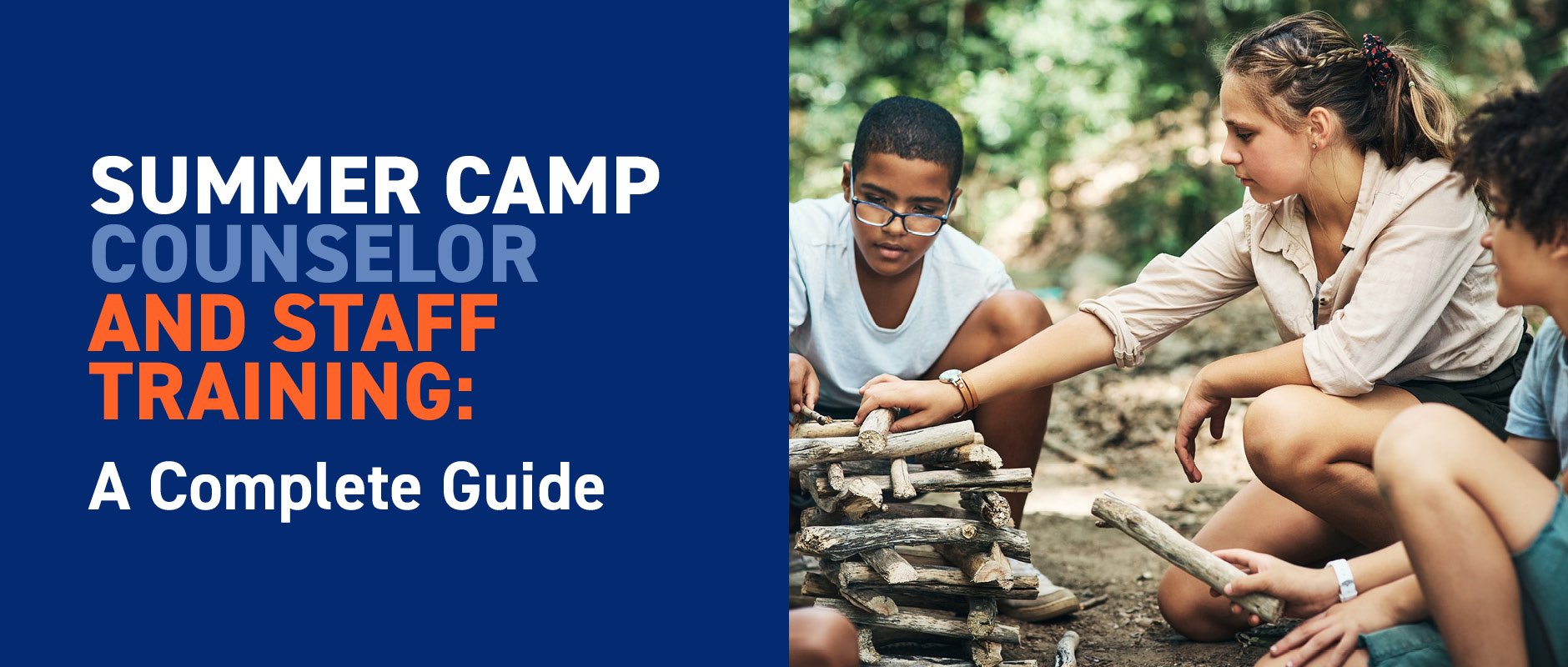
When starting your summer camp, assembling a team of reliable camp counselors is likely near the top of your to-do list. Depending on your camp’s activities, you might need a team of experienced professionals, whereas others can rely on responsible high schoolers.
No matter your team composition, thorough camp counselor training provides your staff with the skills, confidence, and guidelines they need to create a fun but safe environment for your campers.
But, you may be wondering, “How do I successfully complete summer camp staff training?” With a combination of the right camp management software and a structured training program, you can prepare your camp counselors for a memorable summer.
When preparing to embark on your summer camp staff training journey, you may ask yourself:
- How do I successfully conduct summer camp staff training?
- How do I design a summer camp staff training agenda?
- What do I highlight in my summer camp staff training manual?
- How do I streamline the summer camp staff training process with camp management software?
This guide will answer these summer camp staff training questions to provide you with all the information you need to prepare your team for success!
1. How do I successfully conduct summer camp staff training?
Your summer camp is unique. You have your own camp culture and philosophy that shapes the way your camp operates. Through your training process, your counselors-in-training should not only become aware of staff expectations and responsibilities but also understand the camp’s central mission.
To ensure your training program is successful, follow these strategies:
Increase counselor-leadership engagement.
While some members of your camp will take a more hands-on approach for day-to-day activities, all of your staffers, from counselors to administrators to leadership, are on the same team.
By engaging in training exercises alongside your new counselors, you will:
- Foster positive camp relationships. By creating social situations for counselors to get to know one another before campers arrive, you help them build positive, trust-based relationships. This helps forge a sense of community that they’ll rely on for the entire summer.
- Create a sense of camaraderie. When counselors feel connected to each other and the rest of your staff, they’ll feel comfortable relying on others during their time at your camp. Plus, participating in training activities ensures counselors know the rest of your staff, allowing them to easily identify individuals they can go to for help in emergency situations.
- Improve counselor understanding of camp operations. Counselor-leadership engagement prevents your staff from getting stuck in their own separate bubbles. By talking directly with other members of your staff, they’ll gain a better understanding of who does what at your camp, improving their ability to fulfill their own roles.
While get-to-know-you games often get a bad wrap, a few icebreaker activities can go a long way in making leadership seem accessible. During the first few days of camp counselor training, stick around to participate in team-building activities, like team trivia or two-truths-and-a-lie.
Encourage a safe camp experience for the campers.
Your staff must be prepared for anything the camp throws at them. Your training should provide a robust educational experience that reinforces their understanding of camp emergency and safety policies.
Parents are entrusting you with their children, maybe even for weeks at a time, and your staff should not take this lightly. Throughout the training process, highlight the importance of camper safety and outline the steps counselors must take to maintain a safe camp environment.
Enhance staff leadership qualities.
The typical camp counselor is a teen or young adult in their early 20s, meaning their position with your camp is likely their first job. As such, you have the opportunity to foster leadership qualities that will help your staff with their continuing education or career.
While your training should provide necessary support, also provide them with the freedom to manage their own responsibilities. After all, when camp is in session, counselors will be responsible for leading groups of campers either with a partner or by themselves.
Provide counselors with the resources they need to succeed.
Once your staff completes training, they should feel ready to tackle the first week of camp with confidence. They should have the resources they need at their fingertips to facilitate fun, safe camp experiences.
Outside of equipment for specific activities, camp counselor resources will likely include:
- Camp manuals. A camp manual is your counselors’ source of truth for how to act in a range of situations. Prior to training, create a camp manual that provides clear staff guidelines and expectations.
- Communication tools. To keep your camp organized and safe, implement reliable communication systems. Counselors should have the tools they need to get in touch with others at all times, whether this is their cell phone, a walkie-talkie, or another communication device. Plus, camp management software can help counselors check camper information, follow their daily schedules, and send quick messages to other staff members.
- Basic first aid supplies. While your camp should have a dedicated medical tent, cabin, or other location with comprehensive supplies, individual counselors should carry a basic first-aid kit with them. This kit enables counselors to handle minor situations, such as small scrapes and bumps, and provide campers with the assistance they need immediately while contacting your medical team for additional help.
With the right summer camp staff training processes and goals in place, you can successfully train staff members who will effectively facilitate an amazing camp experience.
2. How do I design a summer camp staff training agenda?
Your summer camp counselor training agenda is the driving force behind your training process. It will answer the following questions for your new staff:
- What should I do? Outline the activities counselors will complete, preferably with a brief explanation of the goals they will accomplish by performing each task.
- When should I do it? Specify the deadlines for various tasks, as well as the order in which counselors must complete these activities.
- How should I do it? Your agenda should contain directions for how counselors can complete each task.
With these central counselor questions in mind, follow these steps when planning your agenda:
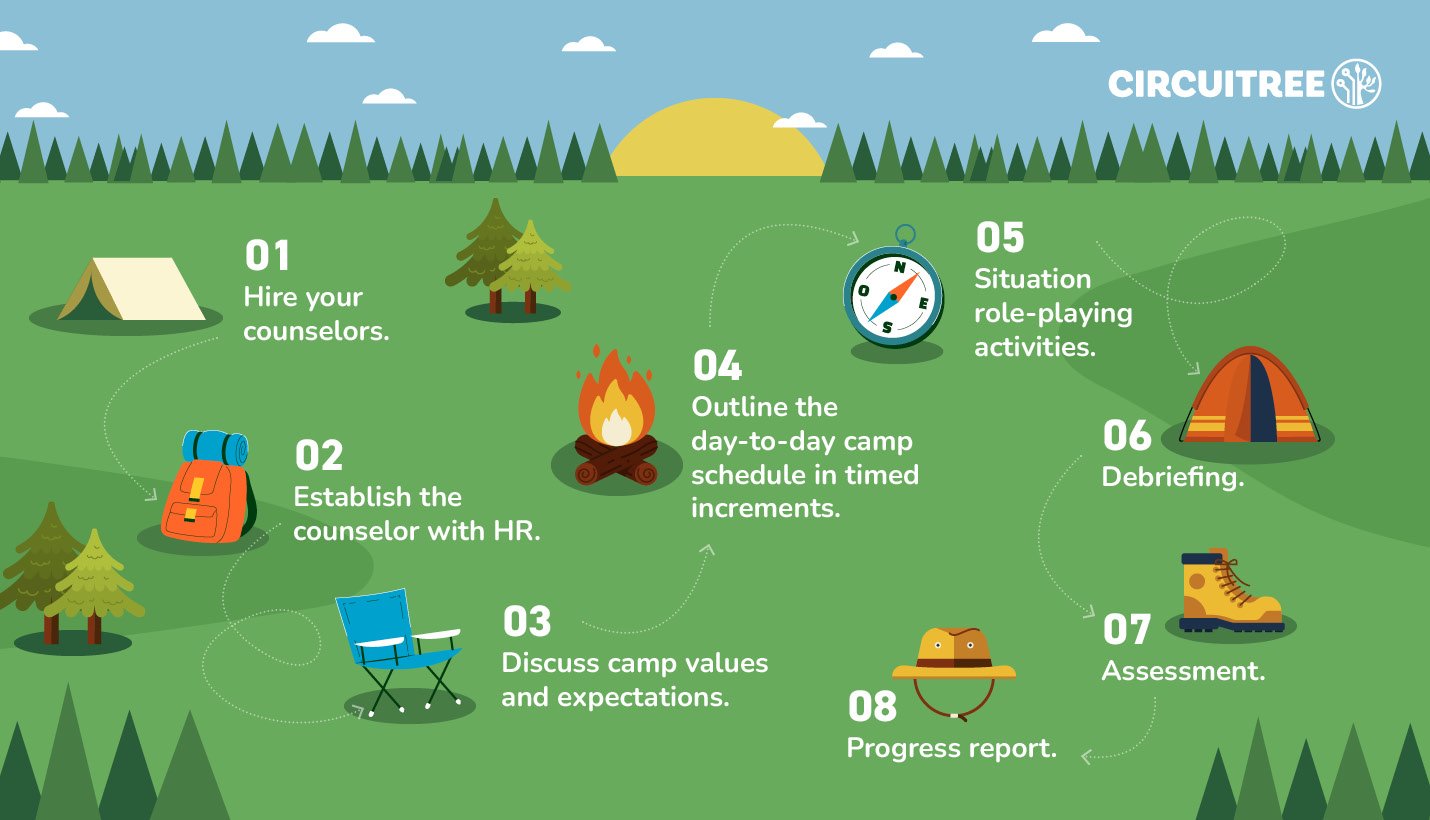
- Hire your counselors. The training process starts the moment you hire a staffer. Ensure your camp counselor job descriptions provide a basic overview of a staffer’s responsibilities and expectations.
- Establish the counselor with HR. Immediately after a counselor accepts your job offer, the HR department should officially bring them on board. This process involves providing payment and tax information and may require the counselor to sign other forms confirming their qualifications.
- Discuss camp values and expectations. Walk new counselors through the reason you started this camp and what needs you think it meets in your community. Explicitly state what you expect of counselors in each role and how they will work together to accomplish the camp’s goals.
- Outline the day-to-day camp schedule in timed increments. Provide all staff with detailed information about your camp’s daily management and schedule. Give staffers an outline divided into 15-30 minute increments for maximum effectiveness.
- Situation role-playing activities. Conduct role-playing activities with your staff that prepare them to engage with campers. Ask them to respond to specific situations that could arise, such as a camper getting sick in the middle of the night or a camper’s negative attitude disrupting an activity.
- Debriefing. After a training session, discuss the counselor’s responses to help them understand what they did right and what has room for improvement.
- Assessment. Assess each counselor’s knowledge of camp policy at the end of the training period. This assessment will gauge how much information they have retained and how prepared they are to begin the summer.
- Progress report. Hold one-on-one meetings between each counselor and the camp director or training specialist. These meetings should cover each counselor’s training progress and answer any questions the staffers may have as they head into the summer.
Your summer camp staff training agenda should guarantee that you cover everything counselors need to know to facilitate a smooth camp experience.
3. What do I highlight in my summer camp staff training manual?
Your summer camp training manual should be your staffers' one-stop shop for information about their responsibilities.
At a minimum, this manual should include the following sections:
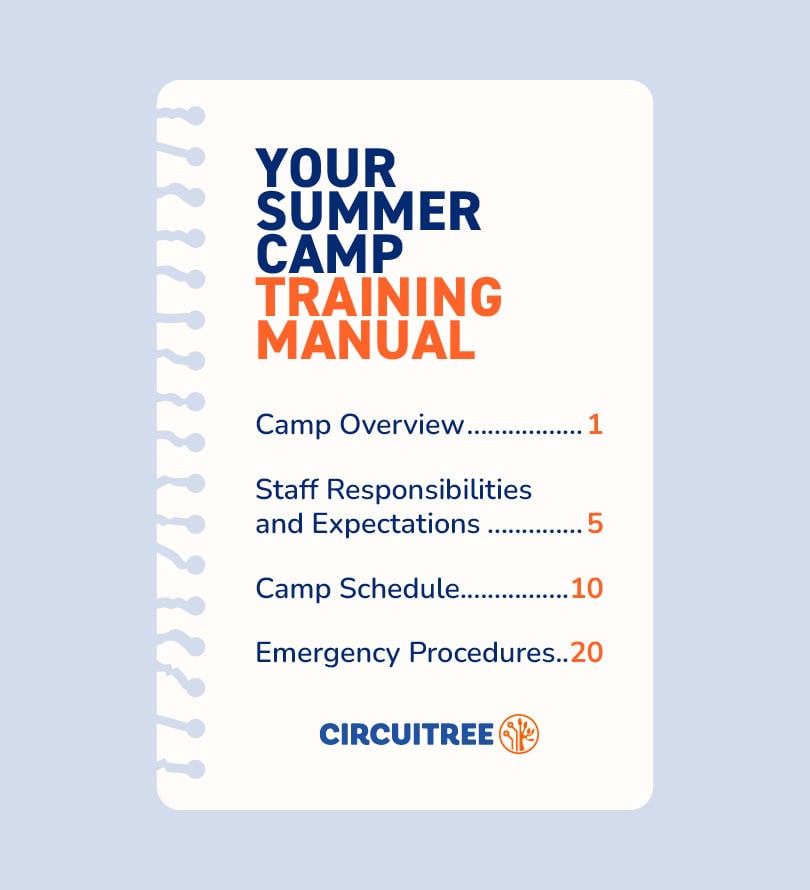
Camp Overview
What makes your camp unique? Help new counselors get to know your camp by providing a short overview of your camp’s:
- History
- Values
- Mission
These details help counselors understand your camp’s purpose and provide guidance on how to act in situations you might not have exact guidelines for.
Staff Responsibilities and Expectations
What is expected of each staffer?
Your summer camp staff training manual should contain a list of responsibilities and expectations for every staff role, including:
- Camp counselors
- Custodial staff
- Lifeguards
- Administrators
- Nurses
Along with understanding their own role’s responsibilities, these guidelines ensure all of your staff are aware of and value the work done by their peers. It will also help staffers understand how everyone must work together to facilitate an amazing camp experience.
In addition to responsibilities unique to each role, you should also include general expectations for all staff, such as policies related to:
- Dress code requirements
- Behavior and code of conduct
- Work hours
- Breaks
- Visitor allowance
- Attendance
While rules should be specific, you may also lay out a general behavioral code of conduct statement that uses qualitative language. For example, you might emphasize that all staff must act respectfully, appropriately, and professionally when interacting with campers.
Camp Schedule
Every year, update your training manual to provide an overview of that camp season’s schedule. This schedule should include both an overview of the entire season and a day-to-day breakdown.
For example, you might call out important dates, such as the first day of counselor onboarding, camper arrival day, and camper departure day. Then, you would list the planned activities for each day, such as campers waking at 8 AM, breakfast at 9 AM, kayaking at 10 AM, and so on.
Emergency Procedures
Ensure your summer camp training manual includes clearly labeled emergency procedures. Add a table of contents at the beginning of your manual so counselors can quickly find the relevant emergency protocol so they can act urgently to ensure campers’ safety.
Emergency situations may include:
- Inclement weather
- Sickness
- Fire
- Dangerous wildlife
With a clear summer camp training manual, no staffer will feel unprepared throughout the summer. They will always have access to the information they need to successfully manage their campers and further the camp's goals.
4. How do I streamline the summer camp staff training process with camp management software?
By now, you may be thinking, “How am I going to juggle summer camp counselor training and camp management?”
Fortunately, there’s a simple solution to this problem: camp management software!
CIRCUITREE’s camp management software helps you run every part of your camp, including counselor training. With our comprehensive platform, you can:
- Create counselor profiles. Keep all staffer information in a centralized location for easy access and analysis.
- Manage online applications. Completely digitize the application process with customizable forms.
- Take interview notes. Prepare interview questions ahead of time and fill in the answers during the interview for easy reference.
- Extend electronic offers. Offer customized positions electronically and have them accept digitally.
- Analyze staff performance. Evaluate staff performance and make changes based on real data to ensure your camp’s success.
Of course, your administrators aren’t the only ones who will use your camp management software. CIRCUITREE’s platform is user-friendly, allowing you to quickly train counselors to leverage the tools they need, whether it’s the centralized database, full of camper information, or integrated communication features that keep your whole camp tuned in.
Your staffers should feel completely prepared for any challenge they may face during camp. The best way to prepare your staff is to provide them with the proper training to use the software tools they need to succeed.
Summer camp staff training is an incredibly important part of managing your summer camp and cannot be overlooked or ignored. Equipped with the right tools and knowledge, your staff will be prepared to overcome any camp challenge.


Rob Burns is the Senior Director of Business Development at CIRCUITREE and Bunk1, providing camps and conference centers with leading tools and resources. Rob has over 20 years of experience in the camps industry. He is also the founder of the nonprofit Run2Revive and a regular conference speaker for the American Camp Association.